Google
 

Tuesday, September 22, 2015

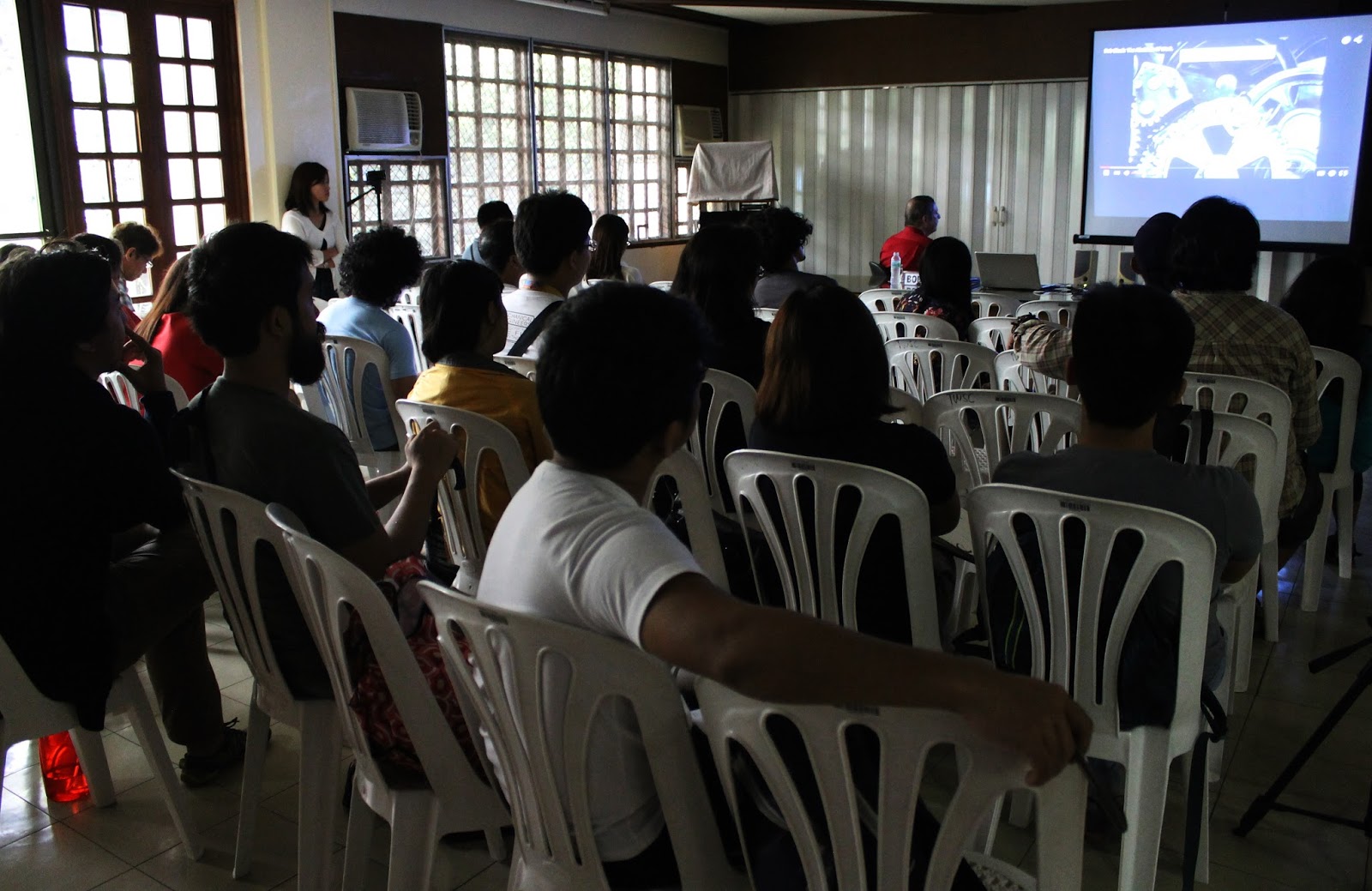
Democratization Advocates in Vietnam, 1990s–2014: A Public Lecture by Dr. Benedict J. Tria Kerkvliet


Democratization Advocates in Vietnam, 1990s–2014
A Public Lecture by Dr. Benedict J. Tria Kerkvliet
7 October 2015 (Wednesday), 1:30 p.m. to 4:00 p.m.
Seminar Room, Hall of Wisdom, Asian Center
University of the Philippines Diliman


Beginning in the mid-1990s, public criticism of the Communist Party government in Vietnam spread to the point that by 2014 it became a prominent feature of the country’s political scene. This presentation emphasizes critics who want to replace, non-violently, the present regime with a democratic political system. Drawing primarily on the writings and actions of Vietnamese critics themselves, the analysis shows that they differ over how to displace the current system. Some regime critics think the Communist Party leadership itself can and should lead the way; others form organizations to openly and directly challenge the regime; still others urge remaking the current system by actively engaging it; and some favor expanding civil society in order to democratize the nation. Underlying the four approaches are different understandings of what democratization entails and its relationship to social and economic development. The presentation ends by contrasting contemporary dissent in Vietnam to political criticism in northern half of the country in the mid 1950s and in Eastern Europe and the Soviet Union in the 1970s-1980s.


ABOUT THE LECTURER

Dr. Benedict J. Tria Kerkvliet is Professor Emeritus at the Department of Political and Social Change, School of International, Political and Strategic Studies, Australian National University. His areas of expertise are Government and Politics of the Asia and the Pacific, and Comparative Government and Politics. He earned his B.A. at Whitman College, and his M.A. and Ph.D. at the University of Wisconsin Madison. His research delves into the “interactions between ordinary people and authorities or other elites.”


The lecture is organized and hosted by the UP Asian Center and co-sponsored by the UP Third World Studies Center and the UP Department of Political Science. The lecture is FREE and OPEN TO THE PUBLIC. However, seats are available on a first-come, first served basis; there is no online registration, but the organizers would appreciate an e-mail expressing intent to come: asiancenter@up.edu.ph.​


PHOTOS


Wednesday, September 09, 2015

The Mass Transit System in Metro Manila: From Tranvia to MRT, 1879-2014

“Rosario Street  Manila, P.I.; 1588; 1926.” University of Michigan Library Digital Collections.


The Third World Studies Center, in collaboration with the National Center for Transportation Studies and the Geography Department of the College of Social Sciences and Philosophy of the University of the Philippines, has been awarded by the Office of the Vice President for Academic Affairs an Emerging Interdisciplinary Research Grant (2015-2017).

The Mass Transit System in Metro Manila: 
From Tranvia to MRT, 1879-2014
Program leader: Dr. Ricardo T. Jose

Executive Summary

The proposed study, though largely historical in approach and structure, draws on the disciplines of geography, transportation studies, and political economy to put together a comprehensive and critical survey of mass transit plans for (Metro) Manila, focusing in particular for this research phase on the rail network that services the metropolis. This is evidenced by the institutions and academics that have come together to draw up this proposal, namely those from the Third World Studies Center, the National Center for Transportation Studies, and the Department of Geography. The core group may still expand as the project commences.

On a theoretical note, reading these varying configurations across time will be informed by a particular understanding of the political economy of ideas and institutions. This particular strand of political economy relies on the critical examination of the idea versus interest continuum and how this contrasting, yet linked, understanding on what drives economic, technocratic, and public policymaking shape the interpretation and implementation of select ideas regarding mass transit planning (Campbell 1998; Steinmo 2008).

The immediate focus on plans and its eventual (non-)execution aims to highlight the varied contexts (social, economic, cultural, political, and even technological) that configured the present-day mass transit system in Metro Manila.

The proposed study will inevitably include other public transport modes but would be focused on mass transit including rail and bus. While jeepneys are not formally classified and recognized as a mass transport mode these will be included in the analysis and discussions as they provide services along corridors that are supposed to be served by traditional mass transit. Upon conclusion of the project, these can serve as the next phase/new research proposal.

Hence for this study, the first priority is to identify, locate, and evaluate all plans related to mass transit—from the tranvia in cosmopolitan Manila at the end of the nineteenth century to the present light rail transits of Metropolitan Manila. Next is a genealogy of contexts: Who proposed what to whom? What did these proposals lead to? How were these plans evaluated by those in positions to make them possible? Why were those built, built the way they were? How were they built and by whom? What sections of the plans were relegated to the dustbin of history? What and who influenced those who made the plans? Those with the power and finances to make them possible, what were in their minds when they decided to build the mass transit systems in Metro Manila? Was it all a question of money and influence, of market efficiency, and not of public service? These questions have not fully been explored before and answering it, as is the intent of the project, will give a deeper context to the present-day problem in mass transit in Metro Manila.

The study, however, does not want to end its close scrutiny of mass transit plans and its contexts with a plan to end all plans. Instead, it will be a tightly-knit series of academic critiques of the current mass transit predicament in Metro Manila drawn from the disciplines of history, transport studies, geography, and political economy. This is what makes it a pioneering study. This is a study that questions both the received wisdom and the supposed alternatives.


Four core projects and their proponents:

Project 1. A history (both text and audiovisual documentary) of the railway systems from the colonial Manila (1879) up to the present Metropolitan Manila (2014) as gleaned from plans and the built infrastructures

Co-project leader: Prof. Marco Lagman, Department of Geography, College of Social Sciences and Philosophy, UP Diliman

Project 2: A GIS rendering of the evolution of the railway system in Metro Manila as well as those which were put into plan but remains unexecuted

Co-project leader: Dr. Dan Mabazza, Department of Geography,  College of Social Sciences and Philosophy, UP Diliman

Project 3: A critical transportation engineering review of the of the mass transit system in Metro Manila, focusing on railways

Co-project leader: Dr. Jose Regin Regidor, National Center for Transportation Studies, UP Diliman

Project 4: An oral history on the politicians, bureaucrats, technocrats, and academics who were involved in planning, designing, funding, and building the Metropolitan Manila mass transit system

Co-project leader: Dr. Ricardo T. Jose, Third World Studies Center, College of Social Sciences and Philosophy, UP Diliman

For any inquiries, please send your correspondence to the Program Manager Elinor May Cruz at uptwsc@gmail.com.

Wednesday, September 02, 2015

Bangsamoro: The Quest for Peace in Mindanao (A Promotional Screening)

Bangsamoro: The Quest for Peace in Mindanao
A FREE PUBLIC SCREENING
22 and 24 September 2015
PH 400, Palma Hall, College of Social Sciences and Philosophy, 
University of the Philippines-Diliman


The UP Third World Studies Center will be hosting the first promotional screening of the documentary, "Bangsamoro: The Quest for Peace in Mindanao," directed by Boyette Rimban, written by Luz Rimban, and produced by the K.A.K. Tri-Media Productions. 

Running for 54 minutes, this documentary will be screened on the following schedules:
  • 22 September 2015 (Tuesday)
    • 10:00 - 11:30 AM
    • 1:00 - 2:30 PM
    • 2:30 - 4:00 PM
  • 24 September 2015 (Thursday)
    • 10:00 - 11:30 AM
    • 1:00 - 2:30 PM
    • 2:30 - 4:00 PM

In this launch event, GPH Peace Panel Chair Professor Miriam Coronel-Ferrer, together with Boyette Rimban, will be present for questions from the audience on the September 22, 10:00 - 11:30 AM and 1:00 - 2:30 PM screenings.


SYNOPSIS

The Moros have long defended their right to self-determination. Since the Spanish colonization of what the conquistadores would later call the Philippines, up to the American occupation, Moros in Southern Philippines have battled invaders who sought to violently subdue them, in order to get hold of the resource-rich land and resources of Mindanao. Manila-based governments have engaged the Moros alternately in war and peace, and it wasn’t until recently, under the administration of Pres. Benigno Aquino III, that peace seemed to be within reach.  

The peace was broken, however, on January 25 when members of the Philippine National Police’s Special Action Force launched an operation in Mamasapano, Maguindanao. The incident burst into the national consciousness, so to speak, and drew attention to the fragile peace that has been holding in Mindanao for at least three years now. 

Not many have properly explained the history behind the Bangsamoro struggle for self-determination and explored the implications of the war to the people. This timely documentary is an attempt to discuss the roots of the conflict and present a deep understanding of the Bangsamoro’s struggle to attain genuine peace and autonomy.


PHOTOS


Friday, August 14, 2015

Palawan Documentaries (A Free Public Screening)

The University of the Philippines Third World Studies Center (TWSC), in partnership with the Department of Political Science of the Université de Montréal under the REINVENTERRA (International Research Network on Exploitation and Usage of Nature, Land, and Resources in Africa, Asia, and Latin America) Project, invites you the free public screening of “Palawan Documentaries” on 20 August 2015 (Thursday) from 10:00 a.m. to 4:00 p.m. (screening time: 10:00-11:30 a.m.; 1:00-2:30 p.m.; 2:30-4:00 p.m.) at PH400 (Palma Hall). Palawan Documentaries features two student documentary films “Sa Rio Tuba” and “Naglalahong Pamana.” Limited seats only.

Synopses


“Sa Rio Tuba”

Rio Tuba in Palawan is the site of the one of the biggest nickel open pit mine in the Philippines. It is also home to a once thriving fishing community along the Togpon River. Bobby Siplan, fisherman, and Lagrimas Padilla, fish vendor, are both members of this community. Two lives whose daily struggle to make a living ebb and flow with the changes wrought upon the river by the mining industry. The mine promises a harvest of bounty. Bobby and Lagrimas think otherwise. This is their story.

Watch Sa Rio Tuba online, for free, here.


“Naglalahong Pamana”

Panglima Kenisio Malasan is a traditional leader of a Palaw’an tribe. Through him, the tribe’s tradition is passed on to the next generation—a tradition rooted in the land. But the Panglima wonders how their way of life can endure in the face of relentless encroachment of palm oil plantations. In a poignant dialogue between father and son, the Panglima and his child share fears for the future of their tribe.

Wednesday, August 05, 2015

Zerowork: From abolition of work to instead of work (A Public Lecture by Bob Black)


About the lecture:

Bob Black’s 1985 essay has received too much attention. “No one should ever work,” thus it begins and “Workers of the world…relax!” and 30 years since, a lot has happened in between. BB’s arguments against work and the right to be lazy is still relevant given the global financial crisis, ecological disaster and ASEAN integration. Bob’s proposition from abolition of work to the passage of productive play, “life will become a game, or rather many games, but not-as it is now-zero/sum game.” According to BB, his anti-work writings during the last three decades are addressed to everybody, but more particularly to anyone who are already working, who is looking for work or who doesn’t have work at all, which includes virtually everybody. Far from being a play on words, Bob longs for open discussion and polemics for and against work. Therefore, it's an open invitation to discuss not only work but play, leisure, ludic lifestyle, technology among others. Come, let’s play.


About the speaker:

Bob Black is an anarchist author based in United States whose training in jurisprudence and anarchism often confronts each other. Black has produced more than 50 titles on topics that range from human rights, democracy, art, technology, among others—apart from anarchy, anarchism, and other celebrity anarchists. The Abolition of Work and other essays (1985) is mainly associated with him and his most recent work is Instead of Work (2015). He is interested to discuss The Myth of Human Rights and Dispute Mediation from primitive societies and contemporary times.


Co-organizers

UP Third World Studies Center
Marindukanon Studies Center
Marinduque Infoshop


PHOTOS FROM THE EVENT