The 2014 UP ASEAN Lecture Series:
Ethnic Conflict and Myanmar's Problematic Democratization
Lecturer: LAHPAI SENG RAW
17-20 February 2014
University of the Philippines-Diliman
It was in June and October 2012 when news of sectarian violence broke out from Myanmar, in Rakhine State. The violent chaos left behind at least 200 people dead, hundreds wounded, thousands displaced, and houses and business establishments destroyed. Violence broke afresh in Meiktila and Lashio early 2013, provoking concern that the Myanmar government has not been responding to the sectarian violence adequately and that underlying, irreconcilable differences between Buddhists and Muslims will undermine recent democratic reforms.
The riots took the international community by surprise; after all, Myanmar until then seemed to be on a relentless march towards democratization. Beginning with the release of famed pro-democracy activist Aung San Suu Kyi in 2010, reforms have been steadily introduced in the country: political prisoners were released in October 2011 and January 2012; the opposition party National League for Democracy was allowed to participate in the 2012 by-elections as a legally recognized political party; new laws allowing the existence of labor unions were introduced; 2,082 names from a blacklist of banned entrances into the country were struck out; a twenty-five-year-old ban on public gatherings was abolished; and private ownership of print media was allowed. The international community proved receptive of Myanmar’s efforts by responding with equal gusto. Myanmar was elected to chair the Association of Southeast Asian Nations in 2014. The Asian Development Bank allowed Myanmar to take out a loan from them in January 2013 for the first time in thirty years. United States President Barack Obama, in a prominent show of support for Myanmar President Thein Sein’s reforms, visited the country in late 2012, the first visit by a sitting US president to a country that until then was considered a pariah state. The European Union also lifted the last of its remaining trade and economic sanctions in April 2013.
Yet Myanmar’s democratization is by no means untroubled. The sectarian violence between Buddhists and Muslims is one of such opportunities for backsliding. To a certain extent, this phenomenon hints at the bigger issue of negotiating differences in a country composed of diverse groups and identities and at a time when spaces for contention with the previously omnipotent state are being opened. Myanmar is one of the most ethnically diverse countries in Southeast Asia—the government recognizes at least 135 distinct ethnic groups under the eight major “national races” of Kachin, Kayah, Kayin, Chin, Mon, Bamar, Rakhine, and Shan. Of these groups, the Bamar of Myanmar’s central plains constitute the majority at 68%. Since its independence from the British in 1948 and following the systematic indifference of the military government under General Ne Win of the Panglong Agreement of 1997, Myanmar has been embroiled in a bitter and drawn out conflict between the state and the country’s ethnic groups, which had formed armed wings to struggle for greater autonomy from the national state. While there had been ceasefires during the 1990s, they were mostly criticized for being short-lived and lacking in authenticity—critics thought of them as opportunities for the military government to enrich itself by way of approving the intensified extraction of natural resources in conflict areas. Though some of the thirteen ceasefire agreements recently signed by Thein Sein’s government were considered mere rehash of their predecessors, when considered within the context of the country’s ongoing efforts to reform, these agreements invite much optimism. Indeed, for leaders of Myanmar’s ethnic groups, the ceasefire agreements represent a widening space for discussion between the government and the ethnic groups and the new attitude of the former at the negotiating table—its “openness, honesty, and willingness to change” (The Economist, May 25, 2013). Union Parliament Speaker Shwe Mann in particular, has been very vocal in his support for federalism—something which ethnic groups have been demanding for a long time—and in calling for greater parliamentary involvement in the peace-making process.
Despite all these, many ethnic groups have been protesting that the ceasefire agreements have brought no real change in the government’s engagement with them. The Karen National Union, for example, has complained that government troops have not been withdrawn in former conflict areas and that human rights abuses committed by the government troops persist. Many Karen have also claimed that their land has been expropriated for the construction of mines, farms, and dams without prior consultation. This latter situation holds for the Kachin as well—the Myitsone dam, a USD 3.6 billion-project by the China Power Investment Corporation, has been a particular source of contention between the Kachin Independence Organization (KIO) and the government. The project, approved by the military government prior to Thein Sein’s, is expected to submerge Kachin villages under the waters of the Irawaddy, thus displacing thousands of Kachin villagers from their homes. These instances of land confiscations and the consequent loss of the Kachins’ livelihood have attended Chinese investments in the massive extraction of Myanmar’s natural resources. In fact, the 17-year-old ceasefire agreement between the government and the Kachin Independence Organization was broken because of government troops’ “cleaning up” operations of an area near Kachin State’s Taping River which was to be the location of operations of lucrative Chinese investment. Since June 2011, conflict between the government and the Kachin Independence Army, KIO’s armed wing, has proved constant. As a result, considerable losses in lives have been recorded on both sides, but accusations of human rights abuses have also been levelled against government troops: looting from civilians, opening fire on villages still occupied by civilians, and using civilians as porters and human minesweepers. There are also reports of Kachin women being raped, killed, and abused as sex slaves, and of Kachin men being arrested and tortured for alleged involvement in the KIO.
As such, this lecture series will explore the issue of ethnic conflict in democratizing Myanmar by focusing on the experiences of nongovernment actors—who are members of ethnic minority groups as well—who have engaged in on-the-ground initiatives for displaced communities of ethnic minority groups. By highlighting these experiences, the series will offer a valuable opportunity for Filipino students, teachers, and civil society actors to get to know the realities behind the recent democratization efforts of the Myanmar government, focusing on the ongoing ethnic conflicts in the country and their effects on the small, beleaguered communities of ethnic minorities.
ABOUT THE LECTURER
Born in 1949, Lahpai Seng Raw majored in psychology in her undergraduate years at the Rangoon University. Belonging to the Kachin minority of Northern Myanmar, she personally experienced the abusive administration of the military when she was detained during the Kachin insurgency. During this period, she worked as the development officer-in-charge of the Kachin Independence Organization’s humanitarian wing where she assisted displaced groups of people in the conflict-ridden zones.
In 1997, she established the Metta Development Foundation (MDF) to work in the rehabilitation and reconstruction of communities affected by armed conflicts. The organization is built on the concept of its name, Metta, which means “loving kindness,” and remains to be its driving force today. Their projects cover various sectors, including agriculture, education, and health care. Among their initiatives are farmer field schools (FSS) that educate and train farmers on different techniques and models of farm and forest management and schools and training centers for childhood education. They have also helped communities develop and manage water, health, and sanitation systems.
Initially, MDF’s operations focused on the Kachin communities in the north but have since spread to other regions with populations of different ethnic origins and religious affiliations, aiding more than six hundred thousand people and around two thousand communities. It is now the largest nongovernment organization in Myanmar.
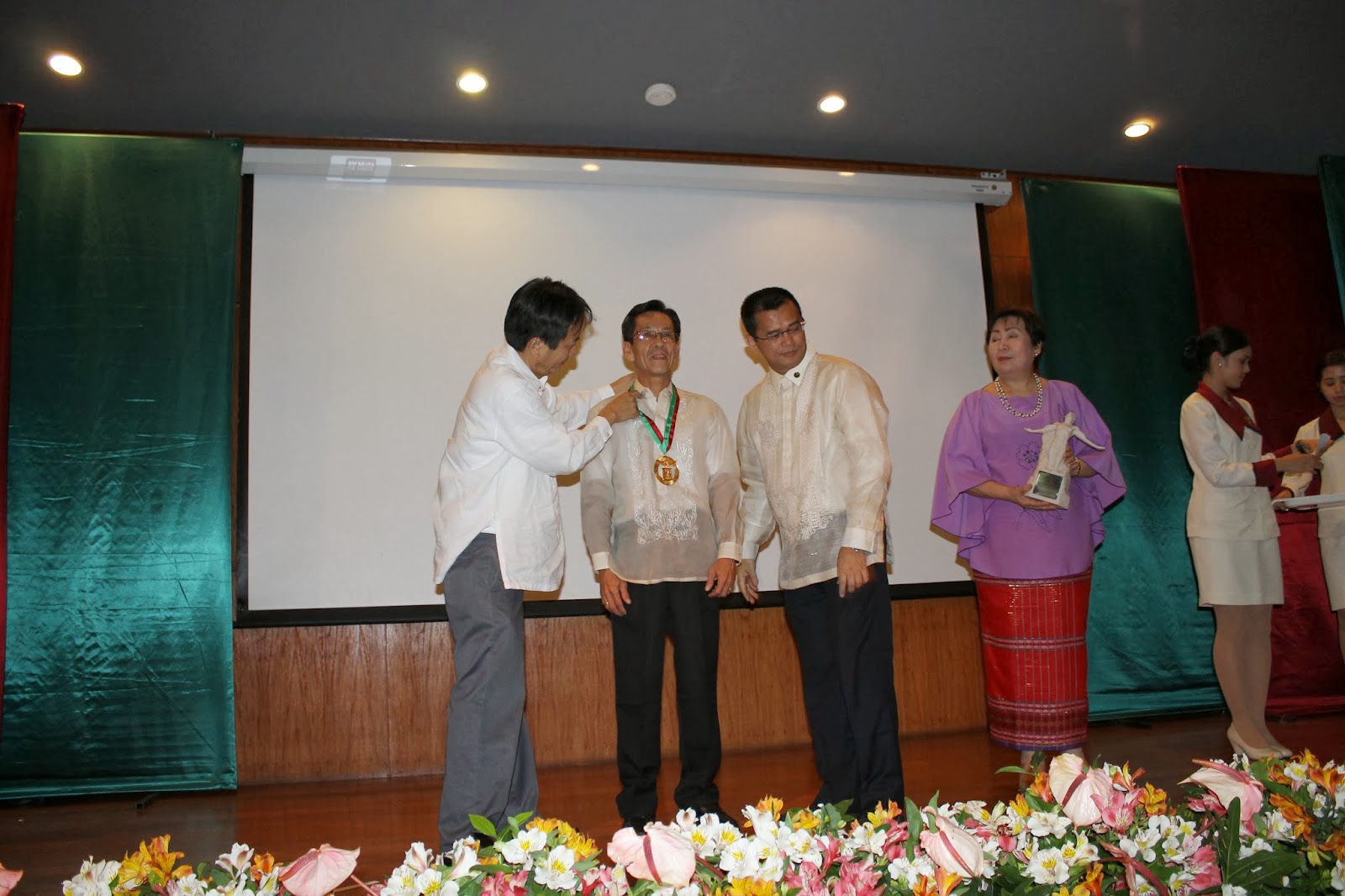
Lahpai Seng Raw received the Ramon Magsaysay Award in 2013, in recognition of—according to her 2013 Ramon Magsaysay Award citation—her “quietly inspiring and inclusive leadership” and because of her efforts “to regenerate and empower damaged communities and to strengthen local NGOs in promoting a non-violent culture of participation and dialogue.”
FORMAT
Day One: Public Forum
17 February 2014 (Monday), 10:00 AM - 12:00 NN, Pulungang Claro M. Recto, Bulwagang Rizal, College of Arts and Letters, University of the Philippines-Diliman
Please click
here for the audiovisual recordings of the public forum.
The public forum will provide a venue for a general discussion of the ongoing ethnic conflicts in Myanmar. Its target audience will be composed of diverse students, faculty, and civil society groups. It aims to answer the following questions:
- How have the Myanmar government and the country’s ethnic minority groups engaged with each other? What is the nature of their relationship? Has their relationship improved over the years?
- How do civil society groups, particularly those concerned with issues regarding Myanmar’s different ethnic minorities, regard the government’s efforts to democratize?
- How does the issue of ethnicity figure into the struggle by civil society for greater democratic representation in Myanmar?
- What are the conditions of communities of ethnic minority groups in conflict areas? How have the national government, the independence organizations, and nongovernment organizations helped these affected communities?
- How was the Metta Development Foundation (MDF) formed? What are the functions of the MDF? What is the nature of their engagement with affected ethnic minority communities in these conflict areas?
- What is the relationship between the MDF and government institutions? How does the MDF coordinate peace initiatives with other nongovernment organizations operating in conflict areas in Myanmar?
- How do the MDF and the independence organizations of the States view each other? How does the MDF look at the armed groups’ violent strategy demanding greater autonomy for ethnic minority groups?
- Has the MDF been successful in its endeavour to help ethnic minority communities affected by the long-standing ethnic conflict? Why so?
Day Two: Undergraduate Class Appearance*
18 February 2014 (Tuesday), 2:30 - 4:00 PM, Room 124, Palma Hall, University of the Philippines-Diliman
The undergraduate class appearance will be in a Political Science 178 (Government and Politics of Southeast Asia) class. This class appearance will give students a chance to probe deeper into the issues previously discussed by the lecturer and raised by the reactors in the public forum.
Day Three: Graduate Class Appearance
19 February 2014 (Wednesday), 5:30 - 7:30 PM, Room HW 201, GT-Toyota Asian Cultural Center, Asian Center, University of the Philippines-Diliman
The graduate class appearance will be in a Politics and Governance in Southeast Asia class of the UP Asian Center, where the lecturer will discuss at greater length her experiences as a peace worker in Myanmar—the conditions of the affected ethnic minority communities, how her organization has helped these communities, the coordination of peace initiatives with other, relevant actors/institutions, and the difficulties that these initiatives have encountered. The graduate class appearance will also be open to other graduate students only.
Day Four: Invitational Seminar**
20 February 2014 (Thursday), 9:00 AM - 12:00 NN, Third World Studies Center Conference Room, Lower Ground Floor, Palma Hall, University of the Philippines-Diliman
Please click
here for the playlist of audiovisual recordings of the seminar.
The invitational seminar is a multisectoral gathering of around thirty experts on conflict and peace-building from the academe (faculty and graduate students), civil society, and government as participants. This seminar aims to open a comparative discussion on the issues and challenges that confront Myanmar and Philippines with regard to conflict and civil society engagement in peace-building. Lahpai Seng Raw will sketch, in broad strokes, the current condition of civil society in Myanmar. In particular, the discussion will revolve around the following questions concerning the health of civil society organizations in Myanmar:
- Is there enough democratic space in Myanmar that would allow civil society organizations to form and operate? Have recent political reforms by the Thein Sein government resulted in more CSOs than before? What is the nature of these civic engagements in Myanmar?
- Are there many CSOs with similar advocacies as the Metta Development Foundation? What are the challenges that have been faced by CSOs engaged with peace-building work in ethnic communities in Myanmar? What characterizes the relationship between the Myanmar government and these CSOs?
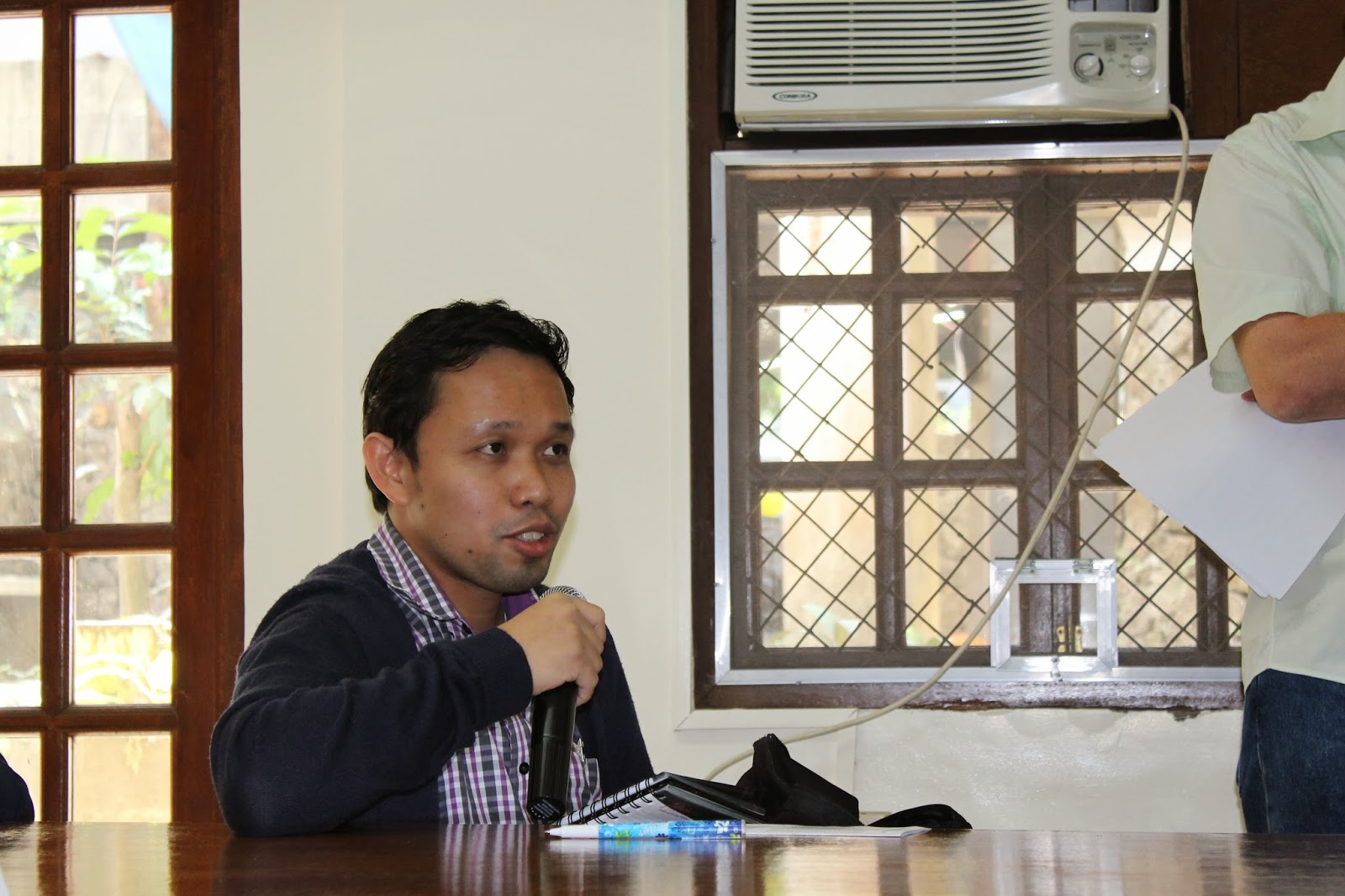
Photos (Day Four):
* - Please note that this undergraduate class appearance is not open to the public.
** - Please note that this seminar is by invitation only.
For more information about the lecture series, please contact the coordinator, Emerald Flaviano, via email (uptwsc@gmail.com) or call at 9205428.